How to Choose Outdoor Furniture for Hotels and Resorts
Choosing the right outdoor furniture for hotels and resorts is an important part of creating attractive, comfortable, and functional outdoor spaces. From poolside lounges and restaurant terraces to garden seating and resort balconies, outdoor furniture needs to combine style, durability, comfort, and practicality.
For hospitality businesses, the right furniture can complement the overall property design while providing guests with a pleasant outdoor experience.
1. Consider the Outdoor Environment
The first step in choosing outdoor furniture is understanding the environment where it will be placed. Hotels and resorts may have outdoor areas exposed to sunlight, rain, humidity, wind, and changing temperatures.
Furniture materials should therefore be selected according to the local climate and the level of exposure.
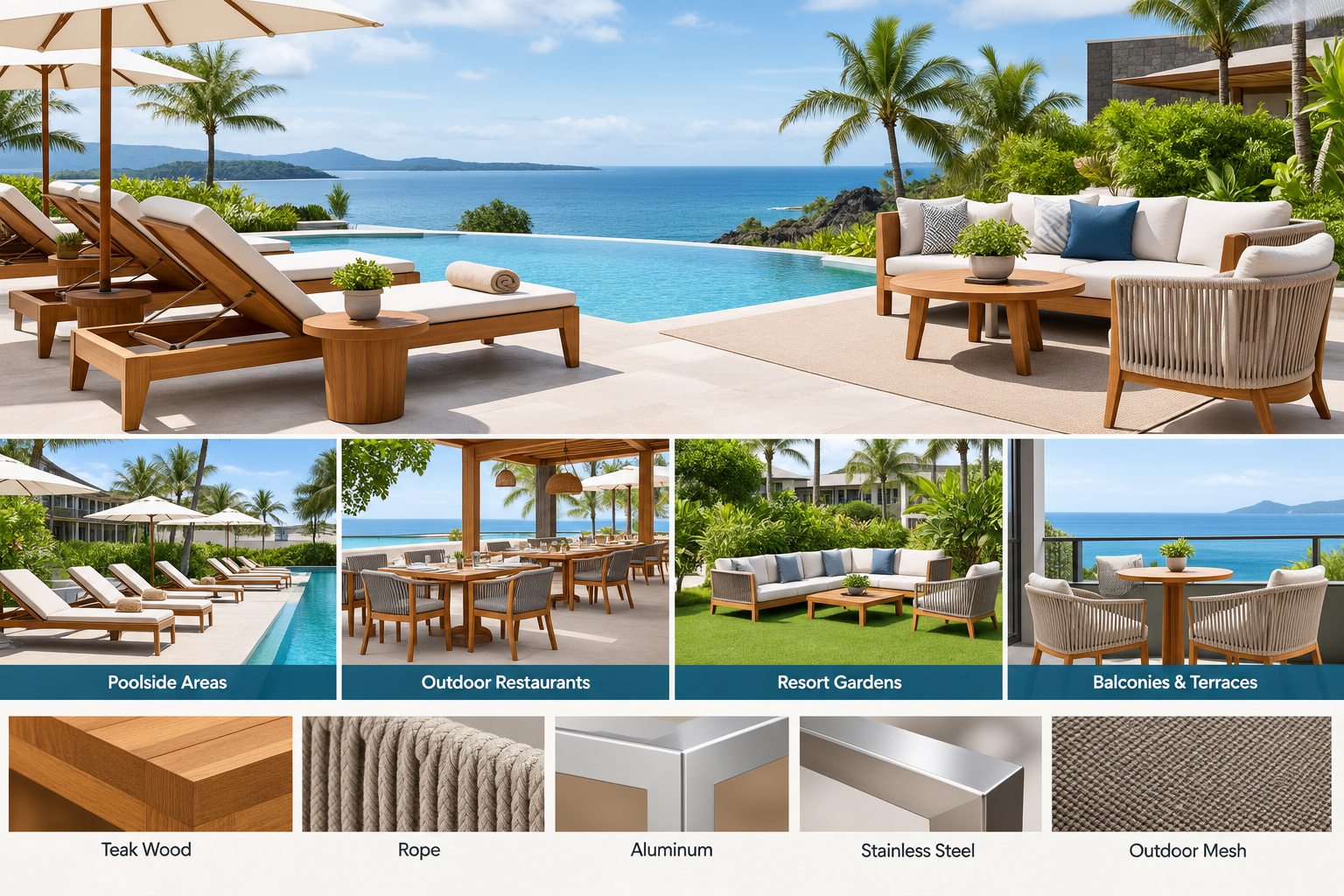
For tropical and coastal environments, materials commonly used in outdoor furniture include teak, aluminum, stainless steel, rope, and outdoor mesh. Proper construction and suitable finishes are also important for long-term outdoor use.
2. Choose Durable Materials
Durability is especially important for hotels and resorts because outdoor furniture may be used frequently by many guests.
Teak is a popular choice for outdoor furniture because of its natural appearance and suitability for outdoor applications. It can also be combined with other materials to create different styles and functional designs.
For example:
- Teak and rope can create a relaxed resort aesthetic.
- Teak and aluminum can provide a contemporary appearance.
- Teak and stainless steel can create a sophisticated modern design.
- Teak and outdoor mesh can provide breathable and comfortable seating.
Selecting high-quality materials can help create furniture collections suitable for demanding hospitality environments.
3. Prioritize Guest Comfort
Outdoor furniture should not only look attractive but also provide a comfortable experience for guests.
Consider the dimensions, seat height, backrest angle, cushions, armrests, and overall ergonomics of each furniture piece. Lounge chairs, dining chairs, sofas, and daybeds should be selected according to how guests are expected to use the space.
For poolside areas, breathable materials and comfortable cushions can be particularly useful. Dining areas may require more upright seating, while lounge areas can benefit from deeper seating and relaxed proportions.
4. Match the Furniture with the Resort Design
Outdoor furniture should complement the architecture and interior design of the property.
A tropical resort may use warm teak furniture combined with natural rope and neutral fabrics. A contemporary hotel may prefer clean-lined teak and aluminum furniture, while a luxury resort may combine teak with stainless steel and premium upholstery.
Consistent material selection across different outdoor areas can create a cohesive visual identity.
5. Consider Maintenance Requirements
Hotels and resorts need outdoor furniture that is practical to maintain. Furniture should be easy to clean and inspect as part of regular property maintenance.
When selecting furniture, consider:
- Cleaning requirements
- Surface finishes
- Hardware quality
- Cushion maintenance
- Replacement of individual components
- Long-term appearance
A clear maintenance routine can help outdoor furniture remain attractive and functional over time.
6. Select Furniture for Each Outdoor Area
Different areas of a hotel or resort require different types of furniture.
Poolside Areas
Sun loungers, side tables, daybeds, and lounge chairs are commonly used around swimming pools. Materials should be suitable for outdoor exposure and easy to maintain.
Outdoor Restaurants
Dining tables and chairs should provide comfortable seating while supporting efficient cleaning and daily operation.
Resort Gardens
Garden furniture can include lounge chairs, benches, sofas, coffee tables, and dining sets. Natural teak furniture can blend well with landscaping and greenery.
Balconies and Terraces
For smaller spaces, compact chairs, tables, and lounge furniture can maximize the available area without making the space feel crowded.
7. Think About Design Flexibility
Hotels and resorts often update their outdoor spaces or develop different areas with different functions. Modular and customizable furniture can make these changes easier.
Furniture manufacturers may offer customization in dimensions, finishes, fabrics, rope colors, table sizes, and material combinations. This allows hospitality projects to develop furniture collections that match their specific design requirements.
8. Balance Quality and Long-Term Value
The lowest initial price is not always the only factor to consider when selecting outdoor furniture for a hospitality project.
Hotels and resorts should consider the overall value of the furniture, including material quality, construction, durability, maintenance, replacement options, and expected service life.
Well-designed furniture can contribute to a consistent guest experience while supporting the visual identity of the property.
Conclusion
Choosing outdoor furniture for hotels and resorts requires careful consideration of climate, materials, comfort, design, maintenance, and functionality. Teak combined with materials such as rope, aluminum, stainless steel, and outdoor mesh provides designers with many possibilities for creating distinctive hospitality furniture.
By selecting furniture that matches the environment, architecture, and intended use of each outdoor area, hotels and resorts can create inviting spaces that are both visually appealing and practical for everyday use.
